 how-to
Interior Car Detailing Warranty Explained: What's Covered
Table of Contents
- Interior Detailing Warranty Explained: The Basics
- What Car Detailing Warranty Coverage Actually Includes
- Interior Detailing Package Inclusions and What They Protect
- Common Exclusions and Claim-Denial Scenarios
- Your Interior Detailing Guarantee: Service Guarantee vs Warranty
- Vehicle Manufacturer Warranty and Detailing: What You Need to Know
- How to File a Warranty Claim Without the Runaround
- Care Requirements That Preserve Your Coverage
- Frequently Asked Questions
Last Updated: October 18, 2026
Interior Detailing Warranty Explained: The Basics
An interior car detailing warranty explained simply is a written promise from a detailer to repair or redo specific interior protection work if it fails within a set period. That is the short version of an interior car detailing warranty explained properly: it covers defined products, for a defined term, under defined conditions.
Here is the part most buyers miss. A warranty is not the same as a guarantee, and many detailers use the words interchangeably. They are not interchangeable.
Warranty, Guarantee, or Neither: Know What You're Buying
A warranty is a formal, written commitment with terms, a duration, and conditions attached. A service guarantee is a promise about the quality of the work itself, usually covering workmanship rather than a product's long-term performance.
Ask for the document, not the verbal promise. If it is not in writing, it does not exist.
Three questions separate a real warranty from marketing talk:
- What product does it cover, by name?
- How long does the term run, and from what date?
- What must you do to keep it valid?
If a provider cannot answer all three on the spot, treat the warranty as decoration.
What Car Detailing Warranty Coverage Actually Includes
Car detailing warranty coverage typically protects the performance of an applied product, not the condition of the whole interior. That distinction matters. A fabric protection warranty covers the protection, not a tear in the seat.
Most interior warranties are written around three promises: the product will stay on the surface for the stated term, it will keep performing its stated function (repelling liquid, resisting staining, limiting UV fade), and the application itself was done correctly.
What Interior Warranties Cover by Material
The clearest way to read an interior warranty is material by material, because the coverage and the exclusions change with the surface.
- Leather and synthetic leather: coverage usually targets condition and flexibility, resistance to drying, cracking, and dye transfer from clothing. Wear through the finish, punctures, and colour loss from abrasion are normally excluded because they are physical damage, not product failure.
- Fabric and upholstery: coverage usually targets repellency and stain resistance. The warranty typically promises that a spilled liquid will bead and blot up rather than soak in. Stains from substances the product was never designed to repel, dye-based drinks, ink, oil-based products, are commonly excluded.
- Carpets and floor mats: coverage is usually limited to the treated carpet, not removable mats, and often excludes stains from mud, oil, or road grime tracked in after the service.
Ask the detailer to point to the line in the warranty that names each material you are paying to protect. If a material is not named, assume it is not covered.
Interior Protection Products and Their Terms
Different interior products carry different warranty terms. Fabric and leather protection typically run shorter terms than ceramic coatings, because the materials face more abrasion and moisture.
| Protection Type | What It Guards Against | Typical Warranty Focus |
|---|---|---|
| Fabric protection | Spills, stains, liquid absorption | Repellency performance over term |
| Leather protection | Drying, cracking, dye transfer | Condition and flexibility retention |
| Ceramic interior coating | Stains, UV fade, grime build-up | Coating durability and hydrophobic behaviour |
| Plastic and trim sealant | Fading, cracking, dust retention | Surface condition over term |
Ask which product is being applied and read that product's own warranty, not a generic one. The detailer applies it, but the terms usually come from the manufacturer. That split matters at claim time: the detailer may be the person you contact, but the manufacturer's terms decide whether the claim is approved.
What a Warranty Does Not Promise
A warranty is not a promise that the interior will stay showroom-clean. It is a promise about how a product performs under normal use. Normal use includes daily driving, passengers, sunlight, and the occasional spill that is cleaned up promptly. It does not include neglect, and it does not include damage that no coating could reasonably prevent.
Interior Detailing Package Inclusions and What They Protect
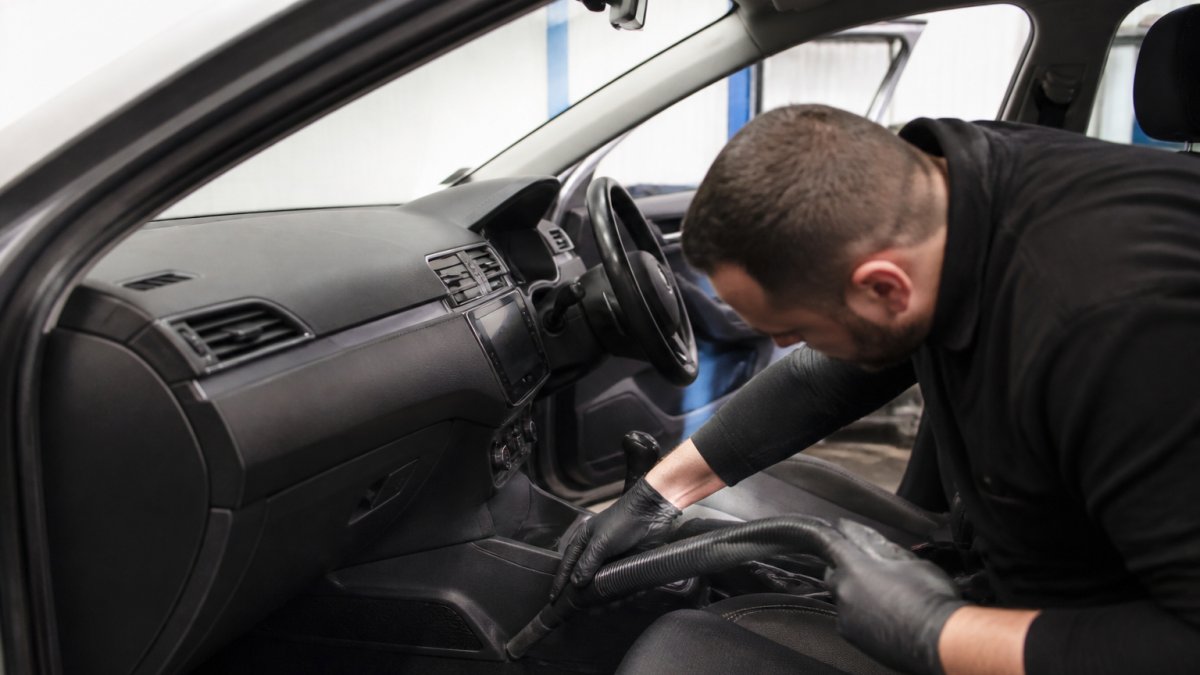
Interior detailing package inclusions vary widely, and the warranty usually attaches only to the protection add-on, not the clean itself. A full interior detail might include vacuuming, steam cleaning, shampooing, leather conditioning, and a protection application.
That is the split nobody explains clearly:
- The clean is a service. It is guaranteed by workmanship, not by a product warranty.
- The protection is a product. It is what a warranty covers.
So when you compare packages, separate the two. Ask what protection product is included, what its term is, and whether the price reflects a genuine warranty-backed application or a spray-and-wipe.
Common Exclusions and Claim-Denial Scenarios
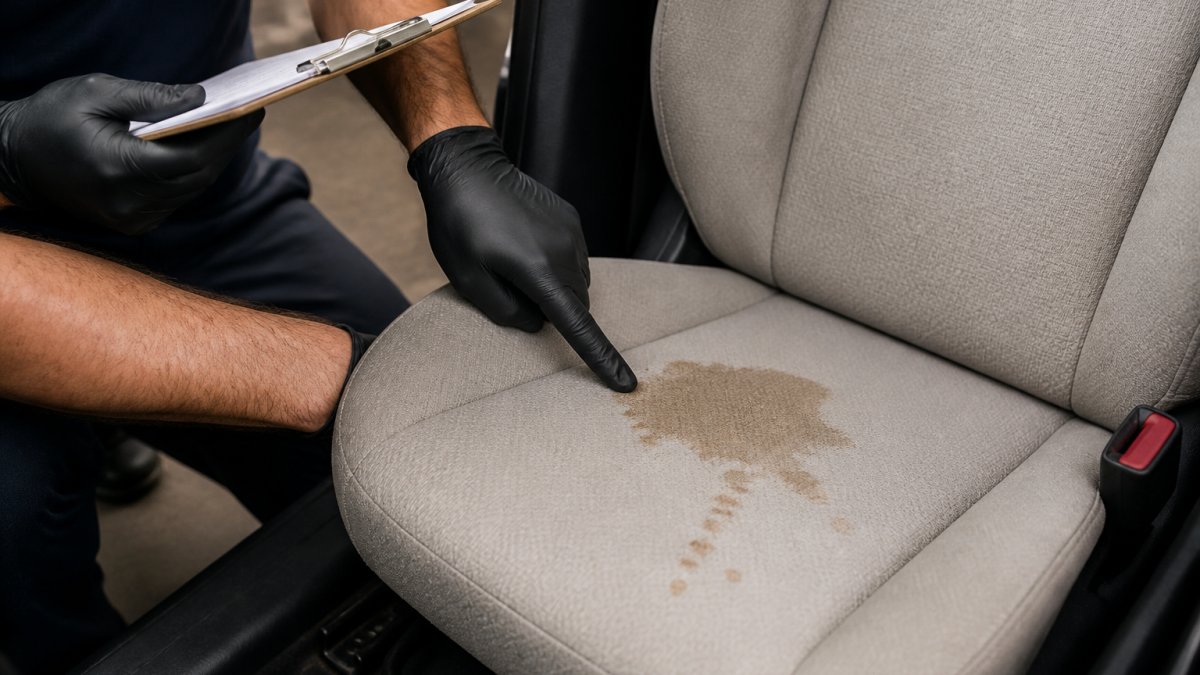
Most claim denials trace back to a handful of predictable exclusions. Knowing them in advance is the difference between a smooth claim and a frustrating one.
Common exclusions include:
- New damage after application: cuts, burns, tears, or chemical spills
- Improper cleaning: harsh detergents or abrasive tools that strip the protection
- Failure to attend required inspections or maintenance
The pattern is simple. Warranties cover product failure under normal use. They do not cover damage from misuse, neglect, or accidents.
Your Interior Detailing Guarantee: Service Guarantee vs Warranty
A service guarantee says: if you are not happy with the clean, we will fix it.
A warranty says: if the protection fails within a set term, we will address it.
Both matter, but they answer different questions. One is about how the car looks when you collect it.
When you book, ask which one applies to which part of the job.
Vehicle Manufacturer Warranty and Detailing: What You Need to Know
Vehicle manufacturer warranty and detailing can interact in ways that surprise owners. Manufacturer warranties cover defects in materials and build, not damage from aftermarket products or poor application.
Two practical rules keep you safe:
- Use products compatible with your interior materials. Check your owner's manual for guidance on leather, alcantara, and coated fabrics.
- Keep records of any aftermarket protection. If a manufacturer Warranty claim ever arises, documented professional work helps your case.
Detailing itself does not void a manufacturer warranty. Poorly applied products that damage a surface can complicate a claim, though. That is why professional installation and a paper trail matter.
How to File a Warranty Claim Without the Runaround
Filing a claim is straightforward when you have the right documents ready and you follow the provider's process in order. Most delays come from missing paperwork or from contacting the wrong party, not from disputed coverage.
Step 1: Confirm Who the Warranty Is With
Before you contact anyone, check whether the warranty sits with the detailer, the product manufacturer, or both. Many interior protection warranties are manufacturer-backed but administered through the detailer who applied the product. That means your first contact is usually the detailer, but the decision may rest on the manufacturer's terms. Knowing this stops you from being bounced between the two.
Step 2: Gather the Evidence Standard
A claim is decided on evidence, so assemble it before you make contact:
- The original invoice showing the date, package, and product applied
- The warranty document or certificate, including the term and start date
- Proof that any required maintenance or inspection was completed
Photographs taken in daylight without flash usually show surface condition more honestly than indoor shots. If the failure is a loss of repellency, a short video of liquid beading or soaking in is more persuasive than a still image.
Step 3: Notify in Writing, Early
Contact the detailer in writing, email is usually best, and state the product, the date of application, the nature of the failure, and the remedy you are seeking. Attach the evidence.
Submit the claim as soon as you notice a problem. Waiting weakens your position, because the provider can argue the failure worsened through neglect or that the issue falls outside the term.
Step 4: Understand the Remedy
Most interior warranties offer one of three remedies: reapplication of the product, a repair to the affected area, or a refund or credit. The warranty document usually states which remedy applies and who chooses it. Read that clause before you accept a verbal offer, so you know whether you are being offered what the terms provide.
Step 5: Escalate if the Claim Stalls
If a claim is refused or ignored, ask for the refusal in writing with the specific exclusion relied on. A written refusal is easier to challenge than a phone conversation. From there, the practical escalation path is usually the manufacturer's customer service (if the warranty is manufacturer-backed), then the detailer's formal complaints process, and then your state or territory consumer affairs body, which handles consumer guarantees and fair trading matters.
A written claim with photos, dates, and the warranty document attached gets resolved faster than a phone call. Put it in writing every time, and keep the paper trail until the claim is closed.
Care Requirements That Preserve Your Coverage
Warranties come with care obligations, and skipping them is the fastest way to void coverage.
What typically keeps a warranty valid:
- Clean spills promptly with a pH-neutral product
- Avoid harsh detergents, bleach, and abrasive brushes
- Attend any required annual inspection or maintenance service
The obligations are usually simple. The point is that a warranty is a two-way agreement. The detailer stands behind the product; you look after it in normal use.
At Ipswich Car Care, we explain the terms before you book, so you know exactly what is covered and what you must do to keep it valid.
Frequently Asked Questions
Does interior car detailing come with a warranty?
It depends on the provider and the package. Basic cleaning usually comes with a workmanship guarantee, not a warranty. Protection products such as fabric or leather coatings often carry a separate interior detailing warranty with a set term, usually 1 to 5 years, plus annual inspection requirements. Ask for the warranty document in writing before booking, and check whether the term applies to the product, the labour, or both. If a provider cannot show you written terms, treat the protection as a service guarantee only.
What is usually excluded from an interior detailing warranty?
Most exclusions fall into four groups: new damage after the service (burns, cuts, tears, ink, dye transfer from clothing), spills left untreated, damage from harsh aftermarket cleaners, and normal wear on high-contact areas like bolsters and armrests. Many terms also exclude damage caused by pets, food, vomit, or mould, and require you to report issues within a set window. Read the exclusions list before you book, because a warranty that covers nothing you actually worry about is not worth paying extra for.
Does a car warranty cover damage caused by detailing?
A vehicle manufacturer warranty generally does not cover damage caused by detailing, because it protects against manufacturing defects rather than third-party work. If a detailer damages a seat motor, a sensor, or trim during cleaning, the claim sits with the detailer's business insurance or their service guarantee, not the manufacturer. This is why you should confirm a provider holds public liability insurance and has a written remedy process before letting them work on seats with airbags, heated elements, or powered adjustments.
How do I file a claim on an interior protection warranty?
Report the issue as soon as you notice it, in writing, with photos and your original invoice. Most terms require you to stop using the affected area and avoid DIY cleaning products until an inspection happens. The provider will usually assess whether the failure is a product defect or an excluded cause, then offer a reapplication, a repair, or a partial refund depending on the term. Keep your annual inspection records, because missed inspections are one of the most common reasons claims get denied.
Protecting an interior only works when the warranty behind it is clear and the care is consistent. If you are unsure what your current protection covers, or want a package with terms explained before you commit, Ipswich Car Care can help. Book online in minutes, choose a time that suits you, and get transparent starting prices with no hidden charges. Get started with Ipswich Car Care and drive away knowing exactly what your interior protection covers.